What Is a Lithobie?
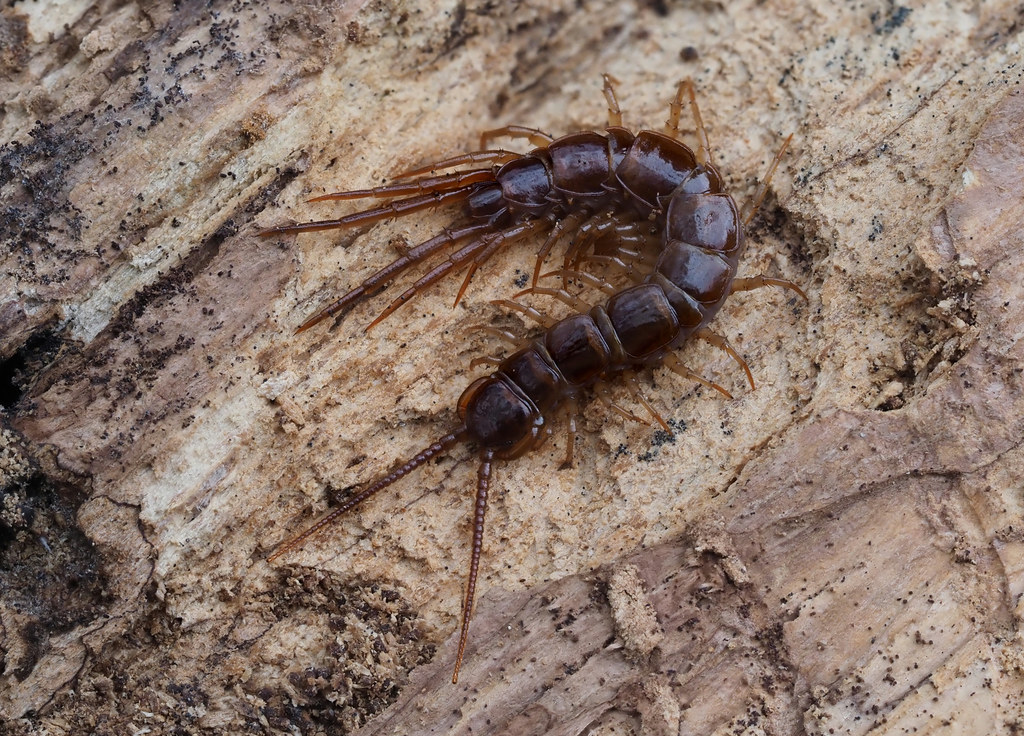
A lithobie is a small, fast-moving myriapod belonging to the class Chilopoda, the group commonly known as centipedes. More specifically, it refers to species within the genus Lithobius, a widespread and diverse group of arthropods found across Europe and many other regions. The name comes from the Greek lithos (“stone”) and bios (“life”), reflecting their habit of living under stones and other dark, humid shelters. Although often mistaken for insects, lithobies belong to a different branch of arthropods. They are predators, playing an important ecological role in controlling populations of small invertebrates.
Biological Characteristics
Lithobies have a distinctive appearance:
- Body structure: Flattened, segmented body divided into head, trunk, and telson.
- Size: Typically between 2 and 5 cm long.
- Color: Shades of yellow-brown to caramel.
- Legs: Usually 15–16 pairs of legs, depending on the species.
- Forcipules: The first pair of legs is modified into venomous claws used to capture prey. These forcipules act like pincers and inject venom into small insects, spiders, and larvae.
- Eyes: They possess clusters of simple eyes (ocelli) that detect light and shadow rather than forming detailed images.
- Antennae: Long, sensitive antennae that help them navigate in darkness.
Their cuticle is thin, allowing observers to see some internal structures, including muscle movements—an unusual feature among arthropods.
Habitat and Lifestyle
Lithobies thrive in moist, shaded environments, such as:
- Under stones
- In leaf litter
- Beneath bark
- Inside rotting wood
- In gardens and forests
They are lucifuge, meaning they avoid light and prefer dark, humid microhabitats. Their distribution is broad, and they are extremely common in European gardens. The species Lithobius forficatus is especially widespread.
Diet and Ecological Role
Lithobies are carnivorous predators. They feed on:
- Insects
- Spiders
- Other myriapods
- Larvae of various species
Their predatory behavior makes them useful allies for gardeners, as they help regulate populations of pests and decomposers. They hunt primarily at night, using their antennae to detect movement and their venomous forcipules to subdue prey.
Interaction With Humans
Lithobies are generally harmless to humans. However:
- They can bite if handled roughly.
- Their venom is designed for tiny prey, so a bite may cause mild irritation at worst.
- They are not aggressive and prefer to flee rather than confront larger animals.
- Their presence in gardens or forests is beneficial, not dangerous.
Why Lithobies Matter
Lithobies are an essential part of the soil ecosystem. They help maintain ecological balance by controlling small invertebrate populations. Their presence indicates a healthy, biodiverse environment. They contribute to the decomposition cycle indirectly by preying on organisms involved in breaking down organic matter.
You may also like to know which are the other black insects that you can find in your house : Black insects found in houses – arthropodinfo
Our learning resources
- Our Gumroad shop : https://arthropodinfo.gumroad.com/
- Dangerousness of arachnids ebook : https://arthropodinfo.gumroad.com/l/dangerousness-of-arachnids