What are Heteropoda davidbowie?
Heteropoda davidbowie, or David Bowie’s golden spider, is a species of arachnomorph spider belonging to the Sparassidae family.
Origin & Habitat
They are native to Malaysia, Singapore, and Sumatra. They lives in tropical forests, often hiding under bark, leaves, or crevices. This species was first described in 2008 by arachnologist Peter Jäger.
Physical Characteristics
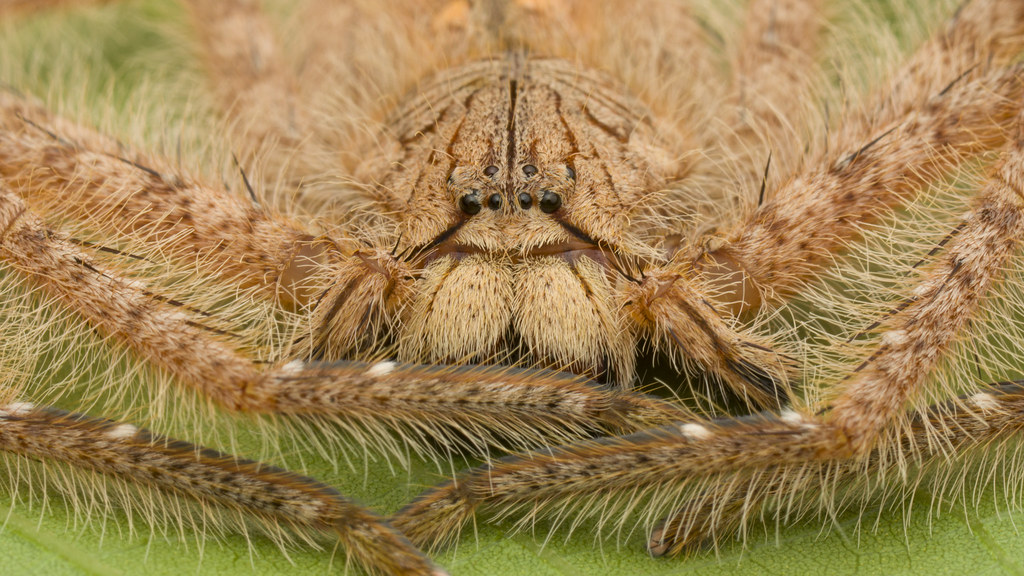
They belongs to the Sparassidae family (huntsman spiders), known for speed and long legs. Their body length is up to 5 cm and their leg span can exceed 20 cm in adults.
The coloration of males is reddish-brown with brightly colored hairs forming lines and patches. The pedipalps (front appendages) are black in males. Females are generally larger and more robust. Their appearance is often described as “electric orange” or flamboyant, which inspired the Bowie reference.
Dangerousness
Heteropoda davidbowie is not considered dangerous to humans. Its venom is not lethal and typically causes only mild, localized symptoms if it bites. Like most huntsman spiders, it prefers flight over fight and bites only when cornered.
Behavior
This spider is Eêxtremely fast and agile — typical of huntsman spiders. They’re nocturnal and hunts at night, hiding during the day. Most of the time, they’re shy but defensive. They’ll avoids confrontation but may show defensive postures if threatened. They’re of course not suitable for handling in captivity due to speed and stress response. For hunting, they uses ambush tactics rather than webs to catch prey.
Notable Particularities
Named after David Bowie, referencing:
- His album The Rise and Fall of Ziggy Stardust and the Spiders from Mars.
- His song “Glass Spider”.
- Its flamboyant coloration is unusual even within the huntsman family.
- Considered a “celebrity species” that helped raise awareness for spider conservation.
You may also like to know how spiders make webs : How do spiders make webs? – arthropodinfo
Our learning resources
- Our Gumroad shop : https://arthropodinfo.gumroad.com/
- Dangerousness of arachnids ebook : https://arthropodinfo.gumroad.com/l/dangerousness-of-arachnids