Why are mosquitoes attracted to certain people?

Mosquitoes aren’t choosing their victims at random — they’re following a surprisingly sophisticated set of chemical and sensory cues that make some people stand out more than others. A few factors consistently show up in the research.

Breath & Carbon Dioxide

Everyone exhales CO₂, but people who produce more of it — often larger individuals or those who breathe more heavily during exercise — create a stronger long‑range signal for mosquitoes. They detect CO₂ from meters away using specialized receptors.

Skin Chemistry & Body Odor

This is one of the biggest differentiators. Humans emit a mix of skin volatiles, and certain compounds are especially attractive to mosquitoes:

  • Carboxylic acids
  • Lactic acid
  • Other unique skin‑derived chemicals

Some people naturally produce higher levels of these compounds, making them “high‑attractors.”

Genetics

Your natural body chemistry — including how much of those skin compounds you produce — is strongly influenced by genetics. That’s why some people get bitten relentlessly while others barely notice mosquitoes.

Heat & Humidity

Mosquitoes can sense body heat and moisture. People who run warmer or sweat more create a more inviting target.

Lifestyle & Environment

Certain behaviors or conditions can increase attractiveness:

  • Recent exercise (more CO₂ and lactic acid)
  • Wearing darker clothing (mosquitoes use vision too)
  • Being outdoors at peak mosquito activity times
  • Higher skin humidity
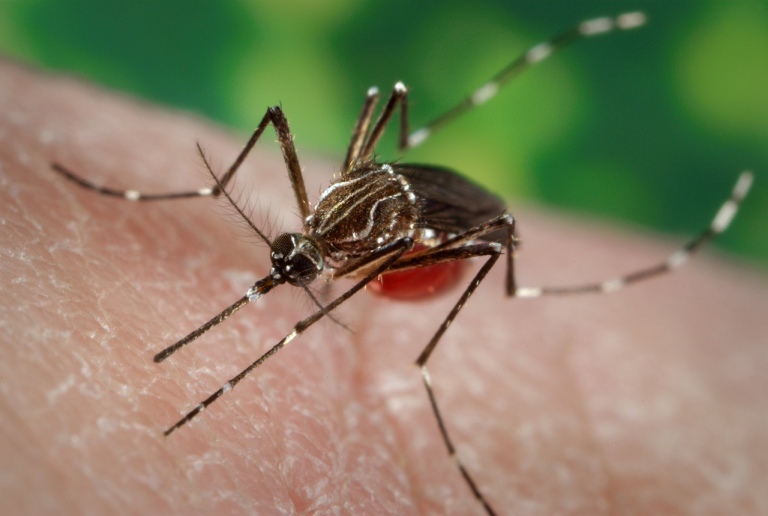
a mosquito on skin

You may also like to know how to identify black insects found in house : Black insects found in houses – arthropodinfo

Our learning resources

Similar Posts

  • How do ants communicate?

    How do ants communicate? Ants have a surprisingly sophisticated communication system, and it’s one of the big reasons their colonies function like well‑oiled machines. Their “language” isn’t spoken — it’s chemical, tactile, and sometimes even vibrational. Chemical Signals (Pheromones) This is the primary way ants share information. Touch & Antennae Taps Ants also communicate by…

  • Why crickets sing?

    Why crickets sing? Crickets have the distinctive trait of “singing.” They do this particularly in the evening and during part of the night for a variety of reasons. Male crickets sing for communication, and most of all, for romance. Their chirps serve several purposes : How do they produce their sound? Crickets don’t have vocal…

  • Why do some insects glow?

    Why do some insects glow? Bioluminescence is the ability of living organisms to produce visible light through internal chemical reactions. Many insects—especially fireflies, glow‑worms, and click beetles—use this ability for communication, survival, and reproduction. Biological Reasons Fireflies use species‑specific flash patterns to attract mates. Each species has its own “flash language,” helping males and females…

  • What is the role of insects?

    What is the role of insects? Insects are far more important than most people realize. They’re not just tiny creatures buzzing around — they’re the backbone of many natural systems and even human industries. Their roles are surprisingly diverse and absolutely essential. Ecological Roles Pollination: Decomposition: Food Source: Soil Health: Population Control: Human Uses Products:…

  • How do bees communicate?

    How do bees communicate? Bees communicate through a remarkably rich language made of movement, scent, and vibration, allowing them to coordinate foraging and hive survival with precision. Their most iconic behavior—the waggle dance—lets them share exact directions to food sources, while pheromones and vibrations help maintain order and signal danger. Key Communication Methods The Waggle…

  • Why do some insects play dead?

    Why do some insects play dead? Many insects “play dead” because freezing or collapsing makes predators lose interest, overlook them, or assume they’re unsafe to eat. This behavior—called thanatosis or tonic immobility—is widespread and surprisingly effective across beetles, bugs, and even some larvae. It works because many predators rely on movement to detect prey or…