How do bees communicate?
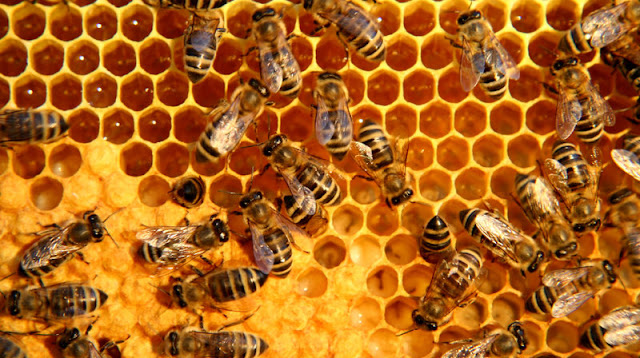
Bees communicate through a remarkably rich language made of movement, scent, and vibration, allowing them to coordinate foraging and hive survival with precision. Their most iconic behavior—the waggle dance—lets them share exact directions to food sources, while pheromones and vibrations help maintain order and signal danger.
Key Communication Methods
The Waggle Dance
- Used mainly by honey bees (especially Apis mellifera).
- A forager performs a figure‑eight dance whose angle and duration encode direction and distance to nectar, pollen, water, or new nest sites.
- One of the most sophisticated non-human communication systems ever documented.
Pheromones (Chemical Signals)
- Bees release different pheromones to mark food paths, signal alarm or danger, identify colony members or coordinate swarming
- These chemical cues help maintain hive cohesion and regulate behavior.
Vibrations & Sounds
- Bees use vibrations—sometimes called “piping”—to stimulate foraging, coordinate swarming and communicate inside the dark hive where visual cues are limited
Tactile Communication
- Touch helps bees interact in crowded hive environments.
- Antennal tapping and body contact convey information when visibility is low.
Visual Cues
- Bees see ultraviolet patterns on flowers, which guide them to nectar.
- These visual signals help them learn and remember food sources.
You may also like to know how do ants communicate : How do ants communicate? – arthropodinfo
Our learning resources
- Our Gumroad shop : https://arthropodinfo.gumroad.com/
- Dangerousness of arachnids ebook : https://arthropodinfo.gumroad.com/l/dangerousness-of-arachnids