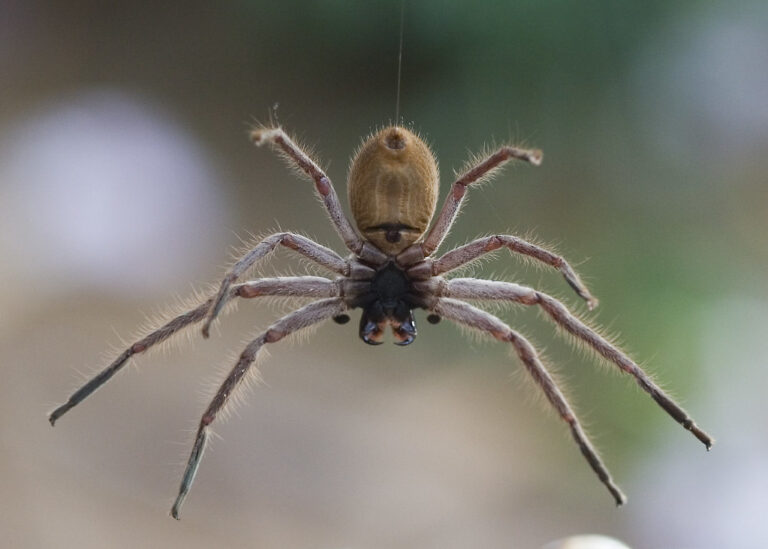
How spiders generate venom?
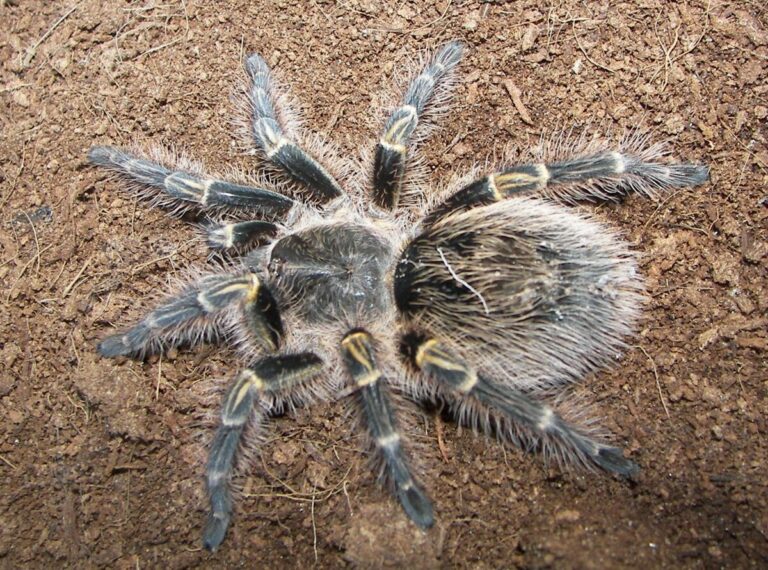
Spiders produce venom in specialized glands located in their chelicerae (the “fangs”), where cells manufacture a complex cocktail of toxins and enzymes. These glands synthesize venom proteins, store them, and release them through ducts when the spider bites.
Venom Glands: The Source
Spiders have paired venom glands inside their prosoma (the front body segment). These glands connect to the fangs via ducts, allowing venom to be injected during a bite. Research on house spiders shows that these glands develop through a defined organogenesis process, forming secretory cells specialized for toxin production.
How venom is made inside the glands
Venom is a biochemical mixture of:
- Peptide neurotoxins
- Enzymes (proteases, phospholipases, hyaluronidases)
- Small molecules
Studies highlight that spiders produce a diverse cocktail of bioactive compounds that evolved to target prey nervous systems and physiology.
Inside the gland:
- Secretory cells transcribe venom genes.
- Ribosomes translate these into prepropeptides (inactive precursors).
- These precursors are processed into active toxins.
- Enzymes are folded and modified in the endoplasmic reticulum and Golgi apparatus.
- The final venom mixture accumulates in the gland’s lumen.
Storage and release
Venom is stored in the gland until needed. When the spider bites, muscular contractions around the gland force venom through the ducts and out the fangs. Spiders can regulate how much venom they inject—some even perform “dry bites.”
Why spider venom is so complex
Research shows spider venoms contain hundreds to thousands of distinct molecules, many of which are peptides with highly specific biological targets.
This diversity evolved because:
- Spiders hunt a wide range of prey.
- Venom must act fast to immobilize insects.
- Different toxins target ion channels, receptors, or tissues
You may also like to know the different types of venom : What are the different types of venom? (there’s a lot)
Our learning resources
- Our Gumroad shop : https://arthropodinfo.gumroad.com/
- Dangerousness of arachnids ebook : https://arthropodinfo.gumroad.com/l/dangerousness-of-arachnids