Why is arachnophobia so common?
Arachnophobia is so common because humans seem to be wired—biologically, culturally, and cognitively—to overreact to spiders, even though most species pose no real danger. Evolutionary instincts, learned behavior, and the way our brains process “creepy” movement patterns all contribute to this widespread fear.
Evolutionary predisposition
Early humans who quickly avoided venomous creatures were more likely to survive. Even though dangerous spiders are rare, our brains may still carry this ancient threat‑detection bias. Researchers suggest that humans can detect spider shapes unusually fast, hinting at an evolved sensitivity.
Cultural learning
Fear is contagious: children often learn to fear spiders by watching adults react. Media, stories, and horror imagery exaggerate spiders’ danger, reinforcing the idea that they’re threatening. Some cultures with positive spider symbolism show lower rates of arachnophobia, which supports the idea that fear is partly learned.
Cognitive factors
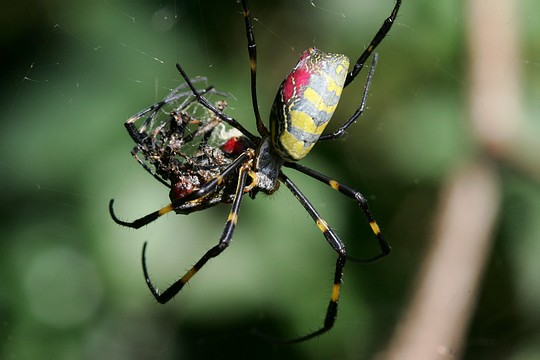
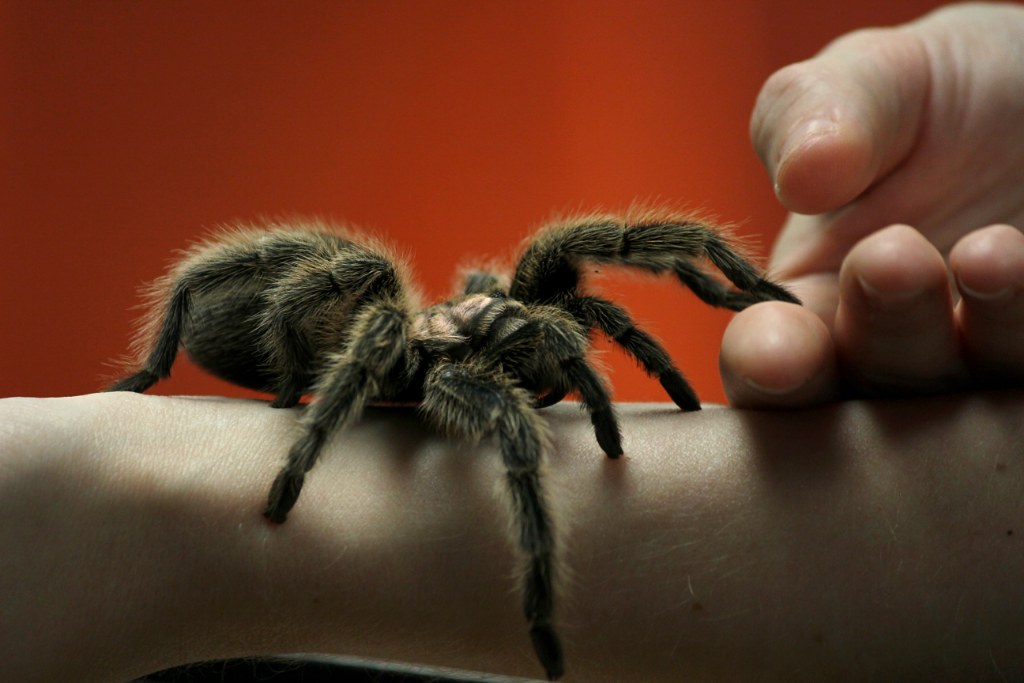
Spiders move in ways humans find unpredictable—quick, jerky, and silent. Their appearance (many legs, unusual body shape) triggers a “disgust response,” which is closely linked to fear. People tend to overestimate the size, speed, and danger of spiders, creating a feedback loop of anxiety.
Physiological fear cycle
Seeing a spider → adrenaline spike → heightened attention → stronger memory of the fear. This cycle makes the fear self‑reinforcing, which explains why arachnophobia can persist even without real danger.
How common is it?
Surveys suggest that up to 40% of people feel uneasy around spiders, and millions experience true phobia-level fear. Exact numbers are hard to verify because mild fear is so widespread.
You may also like to know how do spiders make webs : How do spiders make webs? (their entire process)
Our learning resources
- Our Gumroad shop : https://arthropodinfo.gumroad.com/
- Dangerousness of arachnids ebook : https://arthropodinfo.gumroad.com/l/dangerousness-of-arachnids